Kouign Amann
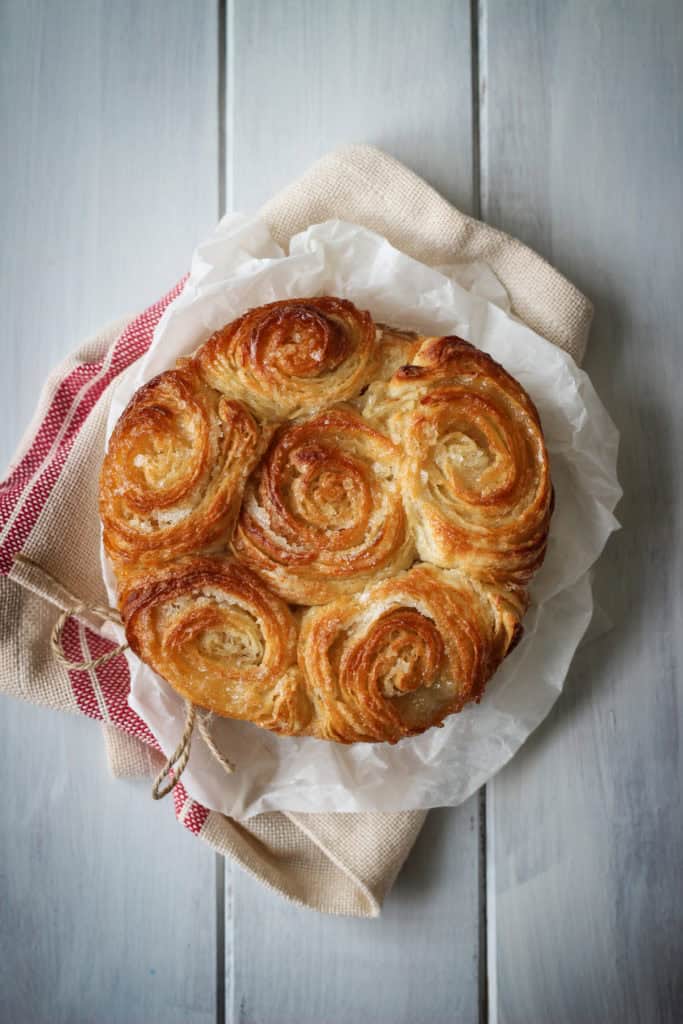
If you've never had kouign amann before, you're in for a treat. This iconic pastry from Brittany, France, is like a buttery salted caramel croissant. It's flaky, golden, crisp on the outside, and chewy on the inside, with a deep salted caramel flavor from layers of salted butter and sugar.
I've been making this kouign amann recipe for almost ten years now, and it has truly stood the test of time. You can bake it as a large, cake-like pastry to slice and share, or make individual portions in muffin tins. Either way, it's my favorite pastry of all times and I hope it becomes yours as well.
Why I love this
- The contrast of the caramelized, crunchy exterior and gooey interior is irresistible.
- Despite the simple ingredient list, the result feels incredibly mind-blowing.
- It's a pastry that impresses everyone and makes the house smell amazing.
Ingredient Overview
Kouign amann is made from just a handful of ingredients, but each one plays a crucial role in creating this unique pastry:
- All-purpose flour - Provides the structure for the dough. A good, high-quality flour helps develop gluten for strong but tender layers.
- Yeast - Gives the dough its rise and light, airy texture. Active dry yeast is traditional and reliable here.
- Sugar - Sprinkled between folds, sugar caramelizes during baking, creating the pastry's signature crispy, sticky crust.
- Salt - Enhances flavor and balances the sweetness, while also strengthening the dough.
- Butter - The star ingredient. Kouign amann literally means "butter cake" in Breton, and high-quality butter makes all the difference. French salted butter is traditional, but unsalted butter with a touch of extra salt works beautifully too.
The magic of kouign amann comes from the lamination process, where butter is layered into the dough along with sugar, creating those caramelized, flaky layers that make this pastry unforgettable.
Step-by-Step Instructions
1. Make the dough
- Dissolve yeast in lukewarm water and let it sit until foamy.
- Add flour, salt, and melted butter, mixing until combined.
- Knead until smooth, then let the dough rise until doubled.
2. Prepare the butter block
- Flatten cold butter into a square between sheets of parchment.
- Chill until firm but pliable.
3. Laminate the dough
- Roll out the dough, place butter in the center, and fold over like an envelope.
- Roll into a rectangle, fold in thirds, and chill.
- Repeat rolling and folding with sugar sprinkled between layers.
4. Shape the pastries
- Roll the dough into a sugar-coated rectangle and fold again.
- Roll up as if making cinnamon buns and slice into rounds.
- Place slices into muffin tins or a round cake pan.
5. Bake and unmold
- Bake at 185°C (365°F) until deeply golden and caramelized.
- Unmold while still warm to prevent the caramel from sticking.
Baker’s Tips
- Chill time is non-negotiable. Always let the dough rest between folds to keep butter from melting.
- Keep butter and dough at the same consistency, which should be cold but pliable. This prevents leaks.
- Don't over-sugar the pan. A light sprinkling is enough for caramelization.
- Unmold while still warm, otherwise the caramel will harden and get your kouign amann to stick.
Common Mistakes to Avoid
- Letting the dough get too warm during folds will cause butter leakage. Chill as soon as it feels sticky.
- Rushing the final rise can also make butter ooze out. Be patient. Let rise overnight in the fridge if you live in a particular warm climate.
- Skipping the oven preheat or underbaking will prevent proper caramelization.
Variations & Substitutions
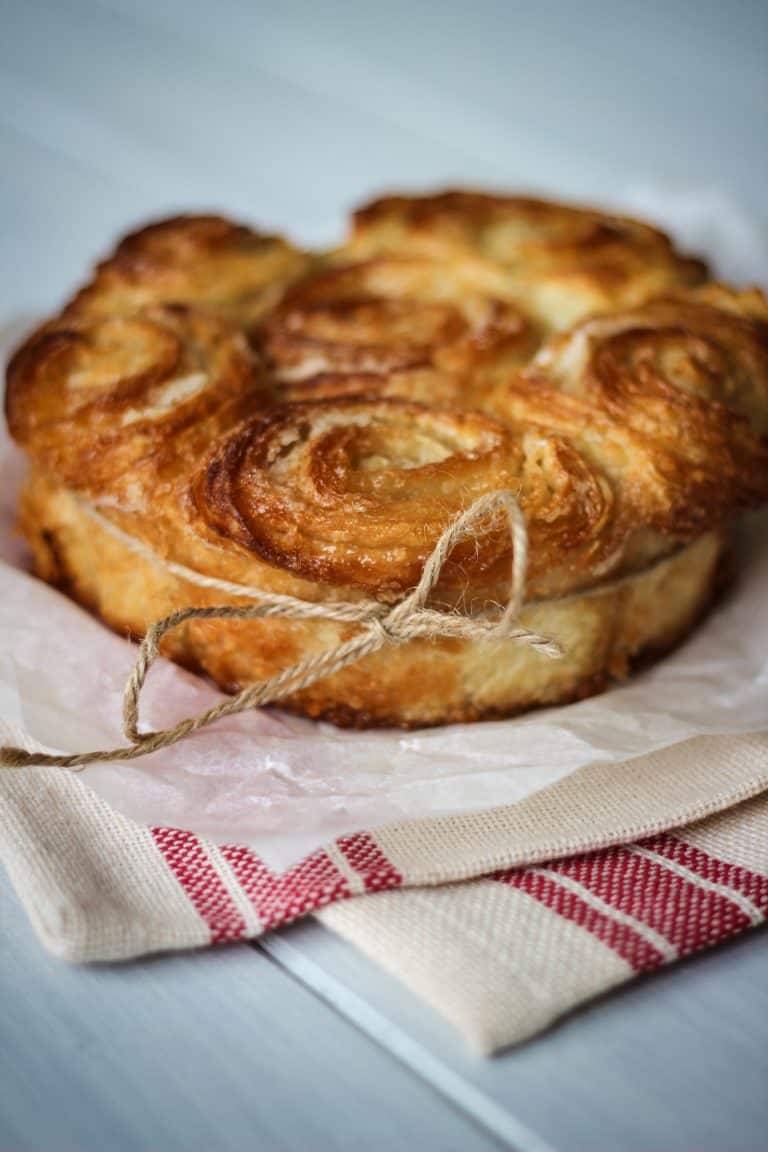
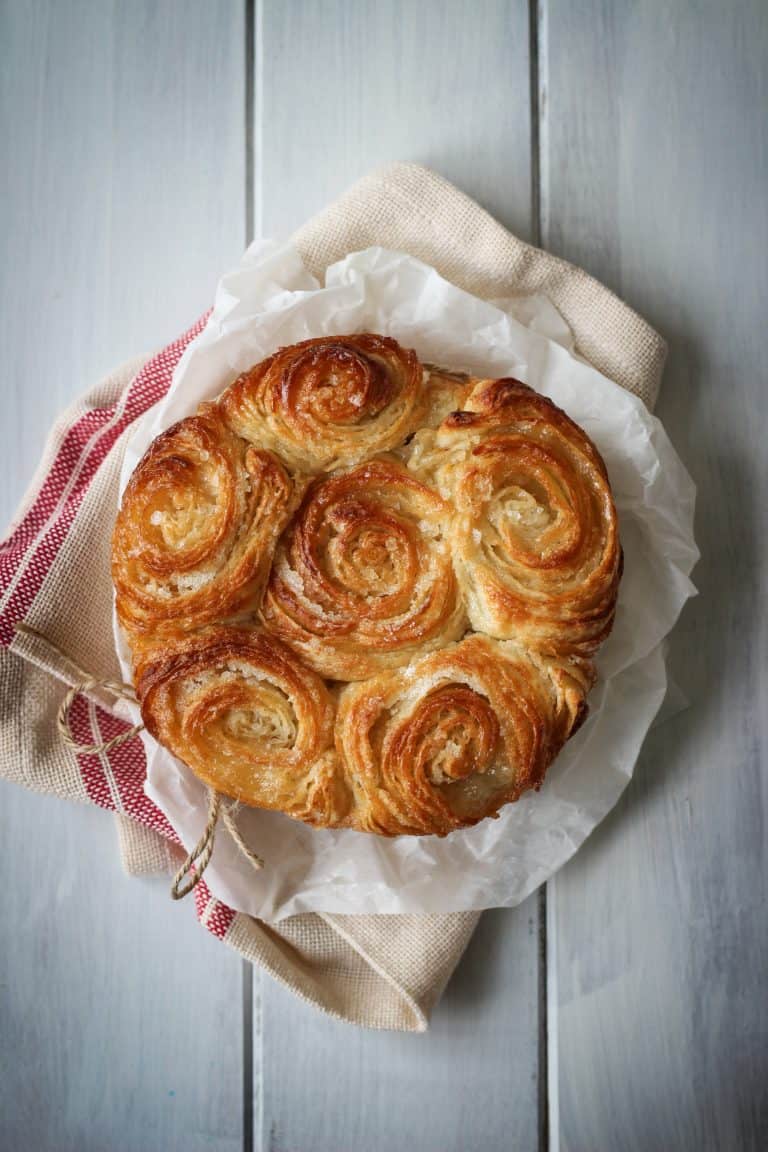
- Bake in a muffin tin for individual pastries or in an 8-inch round pan for a shareable version, like in the picture.
- Use salted or unsalted butter (adjust salt in the dough if using unsalted).
- Add fillings like chocolate, fruit, or Nutella as a topping, though purists might object!
Storage & Freezing Info
- Best eaten in the same day they're made.
- Store at room temperature in an airtight container for 2-3 days. Reheat at 350°F (180°C) for 10 minutes to crisp back up.
- Freeze for up to 2 months in zip-top bags. Thaw overnight and reheat before serving.
Serving Suggestions
Kouign amann is perfect for breakfast, brunch, or an afternoon snack with coffee or tea. Serve as is, or slice in half and spread with jam or Nutella for a different spin on the classic (even the Bretons do that sometimes!).
Equipment
- 1 wooden rolling pin
- 1 muffin pan
Ingredients
- 2 packs active dry yeast 14g
- ¾ cup lukewarm water 175ml
- 1 ¼ cup all-purpose flour 280g
- ½ tablespoon salt 7g
- 1 tablespoon melted butter 15g
- 1 cup granulated sugar 200g
- 1 cup salted butter, cold (preferably with 82-85% fat) 227g
Instructions
- In a bowl, dissolve the yeast in the lukewarm water. Let sit in the counter for 5-10 minutes or until you get a foamy mixture.
- To this mixture, add the flour, salt and the melted butter. Mix it well in the bowl to incorporate.
- Transfer the dough to a floured surface, and knead it well until the dough is smooth. Alternatively, you can use a stand mixer with the hook attachment for this process.
- Spread a little bit of butter in the bowl to prevent the dough from sticking and move the dough there. Cover with cling film and leave it to rise in a warm place for about 30 minutes or until it doubles in size.
- In the meanwhile, make a square of butter between two sheets of parchment paper. It's easier to make it by beating small cubes of butter with a rolling pin until it gets thinner (about 1 cm thick). Trim the sides to make a square of about 10x10 cm. Refrigerate until ready to use.
- Once risen, roll the dough in a floured surface until you get a square that is bigger than your butter square (about 15-17 cm large).
- Place the butter in the middle of the dough, and close the dough on top of it like an envelope.
- Carefully roll the dough with the butter inside until you get a rectangle of about 50x25 cm (I use the rolling pin as a guide).
- Fold the dough in three thirds, one on top of the other and put it in the fridge overnight.
- Now, sprinkle sugar over your working surface and turn the dough with the "open" side (where you can see the folds) facing you.
- Roll the dough lengthwise as a rectangle of the same size again. Sprinkle sugar generously on top and fold again in thirds.
- The dough is ready to use, so now roll it to all directions until you get a square of about 0.5 cm (¼ inch) thickness all over, making sure the working surface is all coated in sugar.
- Grease and sprinkle a thin coat of sugar on each cavity of a muffin pan. Set aside.
- Sprinkle sugar over the top again, and cut the dough into 12 even squares.
- For each square, press the edges into the center and place them on the muffin pan cavities.
- Let the dough rise for about 30 minutes at room temperature and bake at 190°C/375°F for about 40-45 minutes or until caramelized and browned all over.
- Once baked, wait a couple of minutes and remove it from the pan while it's still hot -- otherwise it will stick to the pan and you won't be able to remove them.
FAQ
What does kouign amann taste like?
It tastes like a buttery croissant meets salted caramel crunch. Crisp and caramelized outside, chewy and layered inside.
How do you pronounce kouign amann?
It's pronounced "koon-yah-mahn."
What does kouign amann mean?
The name is Breton, not French, and it literally translates to "butter cake."
Is kouign amann hard to make?
It's more advanced than a standard pastry since it uses lamination, but practice makes perfect. Start with puff pastry or croissants before attempting this if you're new to laminated doughs.
Should kouign amann be refrigerated after baking?
No, it's best stored at room temperature in an airtight container for 2-3 days unless you're freezing them.